As parents, we all want our children to step into school with confidence, curiosity, and a genuine love for learning. While most parents focus on numbers, colours, and basic vocabulary during the preschool years, one foundational skill is often overlooked — the ability to understand how sounds and letters work together to form words.
A structured phonics program gives children the tools to decode language independently, build reading fluency, and develop strong communication skills — advantages that follow them well beyond the classroom.
If you have been searching for phonics classes in Pune or wondering whether your child is ready for early literacy support, these seven signs can help you decide.
What Is a Phonics Program?
A phonics program teaches children the relationship between letters and sounds, so they can read and spell words independently — rather than simply memorising them.
A well-structured program strengthens:
- Reading fluency and word recognition
- Pronunciation and spoken clarity
- Vocabulary and spelling skills
- Listening, comprehension, and focus
- Communication confidence in the classroom
Sign 1: Your Child Recognises Letters but Not Their Sounds
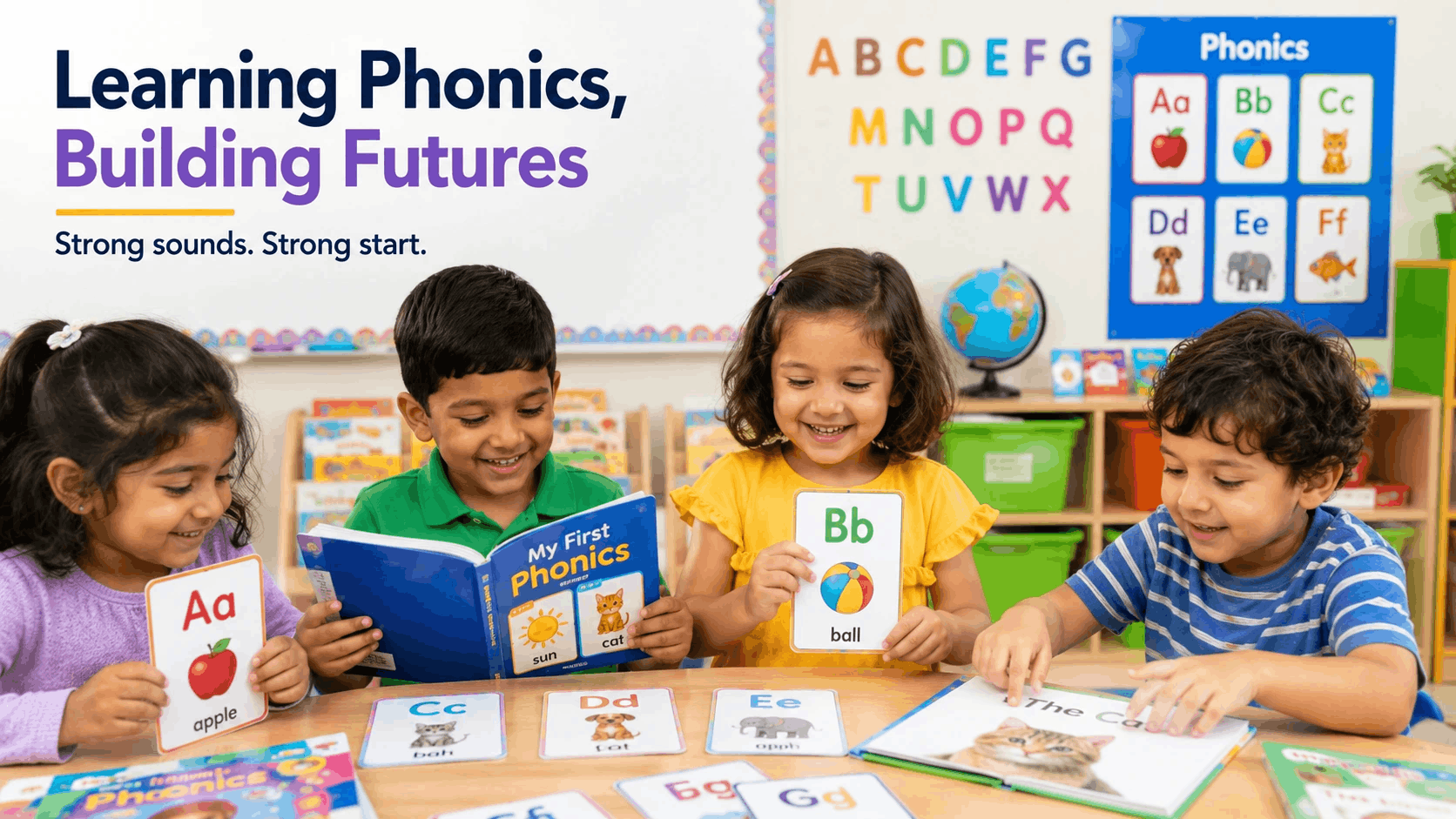
Many preschoolers can point to A, B, or C on a chart. But can they say the sound each letter makes?
Knowing letter names and knowing letter sounds are two very different skills. The ability to connect written symbols to sounds, called grapheme-phoneme correspondence — is the starting point for all reading development. Without it, children struggle to decode new words, even simple ones.
If your child can sing the alphabet but freezes when asked "What sound does B make?", a phonics program will directly address this gap.
Sign 2: Your Child Struggles to Read Simple Words
Children who rely on word memorisation will eventually hit a wall. They can read "cat" and "dog" from familiarity, but stumble over "mat" or "fog" — words they simply haven't seen before.
This is one of the most common child reading difficulties before primary school. Phonics teaches children to blend sounds together systematically, so they can confidently tackle words they've never encountered.
The shift from guessing to decoding is one of the most powerful transformations phonics learning produces.
Sign 3: Your Child Avoids Books and Reading Activities
When reading feels like a struggle, children protect themselves by avoiding it. They ask for TV instead of a story. They flip through pictures without attempting text. They get restless or frustrated during reading time.
This avoidance is not stubbornness — it is a signal.
A structured, activity-based phonics program meets children where they are and makes early reading feel achievable and enjoyable. Building preschool reading skills through positive experiences creates habits that last a lifetime.
Sign 4: Your Child Has Difficulty Pronouncing English Words
Speaking and reading draw from the same phonological foundation. Children who understand letter-sound patterns naturally develop clearer pronunciation and stronger spoken language skills.
If your child regularly mispronounces English words — even familiar ones — phonics can help. It trains the ear to hear distinctions between sounds, and the mouth to produce them accurately.
This is one reason why phonics is recognised as a cornerstone of language development in children, not just reading instruction.
Sign 5: Rhyming Words Are Difficult for Your Child
Ask your child: "Do cat and hat sound the same at the end?"
If they find this question confusing, it may indicate underdeveloped phonemic awareness — the ability to notice and manipulate the individual sounds within words. Rhyming is one of the earliest indicators of how well a child processes sound patterns.
Children who struggle with rhyming often respond very well to structured phonics activities that isolate and compare sounds in a fun, play-based way.
Sign 6: Your Child Is Starting Kindergarten or Primary School Soon
School readiness is about far more than sitting still. Children who enter school with foundational reading skills can follow spoken instructions, decode written tasks, engage with lessons, and build positive relationships with learning from day one.
Strong kindergarten English learning skills reduce first-day anxiety and help children participate fully — rather than spending their early weeks simply catching up.
Whether your child is starting in the next term or the next academic year, beginning phonics now creates a meaningful head start.
Sign 7: Your Child Is Not Yet Showing Strong School Readiness Skills
Reading readiness and school readiness overlap significantly. Both require listening skills, vocabulary, attention, and the confidence to communicate.
Children who receive phonics support before school often develop:
- Better attention spans and listening habits
- Wider vocabulary for expressing thoughts
- Greater willingness to attempt new challenges
- Stronger self-confidence in group learning environments
Phonics learning strengthens these abilities together, making it one of the most efficient investments in early childhood development.
Why Early Literacy Skills Matter
Research consistently shows that children who build strong reading foundations early tend to perform better across all school subjects as they progress. Language sits at the heart of every lesson — maths word problems, science instructions, history comprehension — and fluent readers access all of it more easily.
The earlier a reading gap is identified and supported, the more straightforward the solution tends to be.
Key benefits of early phonics learning:
- Confident, independent reading from the start of school
- Improved vocabulary and self-expression
- Clearer pronunciation and spoken English
- Better comprehension and classroom participation
- A positive, enduring relationship with reading
When Should Parents Consider a Phonics Program?
If your child shows one or more of the following, now is a good time to explore phonics support:
- Confusion between letter names and letter sounds
- Difficulty reading or blending simple words
- Avoidance of books or reading activities
- Challenges with rhyming or sound recognition
- Unclear pronunciation of common English words
- Upcoming transition to kindergarten or primary school
Early support is always more effective than remediation. The goal is to make reading feel natural and achievable — before frustration sets in.
Frequently Asked Questions
What age should a child start phonics?
Most children benefit from phonics learning between ages 3 and 5, depending on their individual readiness. At Phonics World Pune, we welcome children from 2 years and above with age-appropriate beginner programs.
Does phonics improve communication skills?
Yes. Phonics builds the sound awareness that underpins pronunciation, vocabulary, listening, and speaking confidence — all core elements of strong communication.
Can phonics help children before primary school?
Absolutely. Early phonics learning gives children foundational literacy skills that support a confident, smooth transition into formal schooling.
How do I know if my child needs phonics classes?
Watch for signs such as confusion with letter sounds, difficulty sounding out simple words, avoiding reading, or trouble with rhyming. Any one of these is worth addressing early.
Final Thoughts
Every child learns at their own pace, but reading confidence rarely develops without the right foundation. Recognising the signs early and providing targeted support can make an enormous difference to how your child experiences school, learning, and their own potential.
If you are looking for phonics classes in Pune, in Baner, Karve Nagar, or Swargate. Phonics World Pune offers structured, age-appropriate programs designed to build reading confidence, sound awareness, vocabulary, and school readiness in children from age 2 upwards.
With 13+ years of experience in early childhood education, activity-based teaching methods, and small-group learning environments, Phonics World Pune supports children at every stage of their literacy journey.